
Analysis · Türkiye · South Africa
Türkiye and South Africa Strengthen Their Relations
Paul Mashatile’s Ankara visit revived the Türkiye–South Africa Binational Commission, set a $5 billion trade target and deepened a Global South partnership.
 6 July 20263 min read
On 31 July, US President Donald Trump signed an executive order entitled Further Modifying the Reciprocal Tariff Rates that imposed an additional 30 per cent tariff on a range of goods imported from several BRICS countries, South Africa among them. In response to this development, Pretoria reaffirmed its determination to diversify its economic partnerships in order to reduce its dependence on the American market. Against this backdrop, Türkiye emerged as a prospective strategic partner on account of its industrial capacity, its investment potential and its steadily growing role within the Global South.
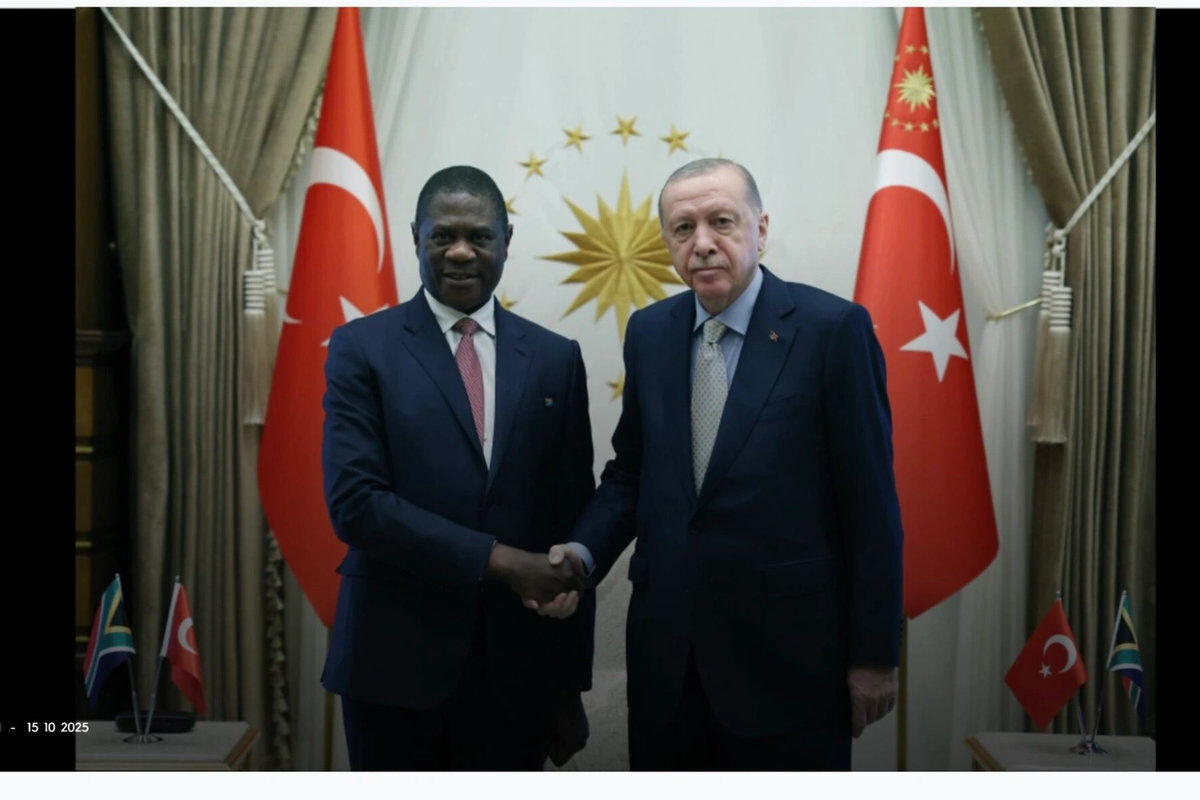
Paul Mashatile’s official visit to Ankara on 15–17 October 2025 took place in this context of shifting trade balances. The visit marked an important turning point in the institutional revival of bilateral relations between Türkiye and South Africa. For the first time since the mechanism was created in 2012, the Türkiye–South Africa Binational Commission met under the co-chairmanship of Cevdet Yılmaz and Paul Mashatile. Cooperation was thereby raised to vice-presidential level. This elevation in diplomatic rank reflected the two countries’ determination to place their partnership within a regular and structured framework. It was decided that the Commission would henceforth meet every two years in order to monitor projects and assess the results achieved.
In keeping with this new momentum, a series of agreements were signed in the fields of economy and trade. Prominent among them were a joint declaration on the establishment of a Joint Economic and Trade Commission, intended to create a permanent dialogue mechanism between the two countries’ trade ministries and to remove obstacles to bilateral trade, and a memorandum of understanding on cooperation between free zones. This second agreement aimed to encourage industrial investment, logistics cooperation and the transfer of know-how. Sectoral agreements were also signed in the fields of sport and higher education, with the aim of strengthening academic and cultural exchanges. According to the two delegations, these instruments constitute important mechanisms for making economic cooperation durable and shielding it from political fluctuations.
Commercially, Ankara and Pretoria share a clear objective: to raise bilateral trade volume from 2 billion to 5 billion dollars in the medium term. The two sides agreed that the existing potential remains largely untapped. Renewable energy, infrastructure, the automotive industry, agricultural machinery, mining industries, information technology, health and tourism were identified as the main priority sectors. These areas are expected to serve as levers for a more balanced and sustainable economic cooperation.
The economic dimension of the visit continued in Istanbul, where Paul Mashatile attended the 5th Türkiye–Africa Business and Economic Forum. Addressing an audience of business leaders and representatives of economic institutions, the Deputy President of the Republic of South Africa described his country as “a gateway to the African continent for Turkish companies” and drew attention to investment opportunities in the southern African region. Turkish Trade Minister Ömer Bolat, for his part, stressed the central role of the Joint Economic and Trade Commission in strengthening trade relations and encouraging mutual investment.
Finally, the visit also acquired a notable diplomatic and symbolic dimension. Ankara reiterated its support for the case South Africa is pursuing before the International Court of Justice over alleged violations of international humanitarian law in Gaza.
From a strategic standpoint, the South African Deputy President’s visit to Ankara consolidated the establishment of a structured framework of cooperation between Türkiye and South Africa. This process symbolised the transition of relations between the two countries from a level of occasional and limited bilateral contact to an institutionalised and sustainable partnership. This momentum took concrete form in the launch of an economic roadmap built on diversifying trade, facilitating mutual investment and harnessing the industrial complementarities of the two economies.
Beyond its economic dimensions, the meeting also confirmed the emergence of a political and diplomatic partnership founded on shared principles such as international justice, sovereignty and equality among nations. Within this framework, Ankara and Pretoria stand out as two complementary actors within the Global South, seeking to develop a balanced model of cooperation independent of the traditional centres of power.
Seen from this perspective, Türkiye is strengthening its position as a key actor in southern Africa by deepening its relations with a stable and influential regional power in South Africa. South Africa, for its part, is consolidating its role as Ankara’s strategic partner within BRICS and turning this bilateral relationship into an instrument for extending its diplomatic and economic reach in a global order that is being reshaped.
This article was first published in French on 19 September 2025 on Eurasiapeace. It was translated from the original into Turkish by Eren Gökdemir.