
Analysis · France
France’s Power Paradox: Ambitions, Resources and the Sustainability Dilemma
How France’s global ambitions are outrunning a state capacity eroded by debt, political deadlock, retreat from Africa and military overstretch.
 14 August 20264 min read
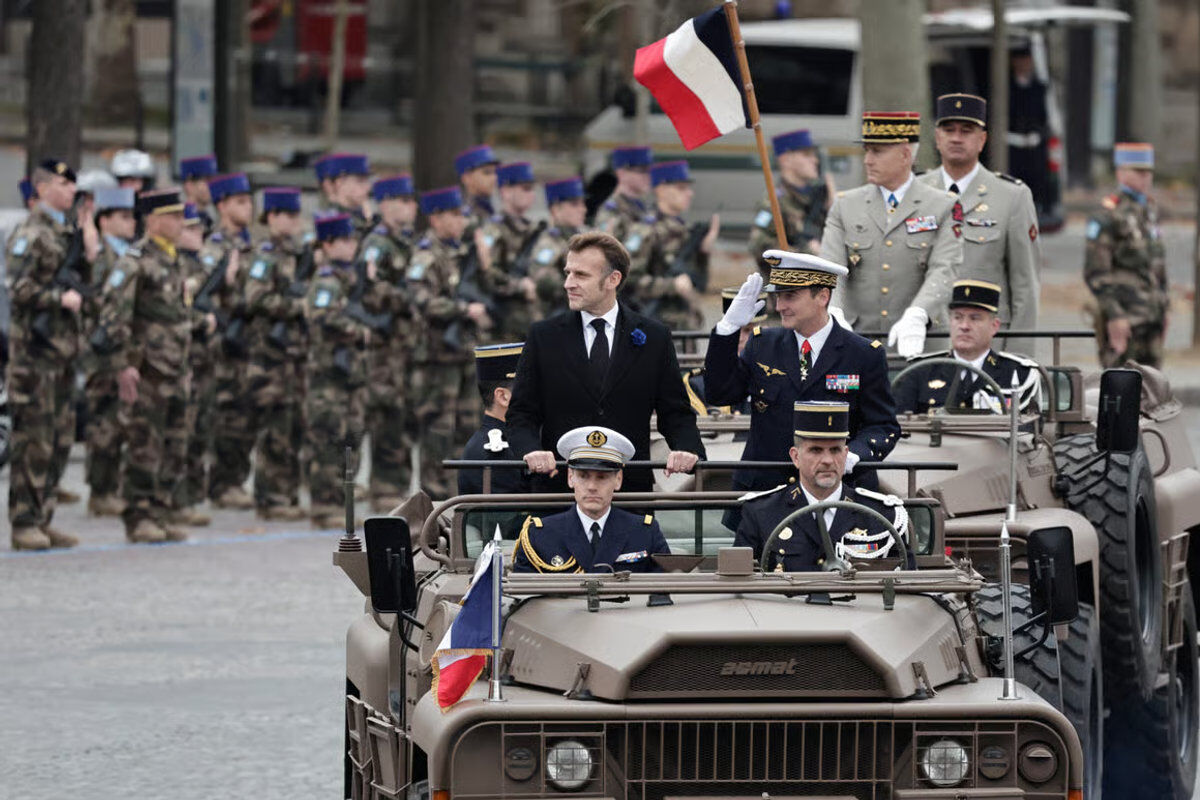
Charles de Gaulle’s historical vision, which identified France’s existential identity with the “claim to great-power status”, continues to form the foundation of the country’s contemporary foreign policy and security doctrine.
In today’s international system, France occupies an exceptional position in European geopolitics, with its independent nuclear deterrent, its permanent seat on the United Nations Security Council (UNSC), a defence-industrial complex built on advanced technology, and overseas territories stretching from the Indo-Pacific to the Caribbean (with the advantages of their exclusive economic zones). Yet the economic, political and diplomatic developments of recent years raise the question of how far these elements of power actually correspond to the country’s real capacity. Rising public debt, the failure to form a durable parliamentary majority, sovereignty disputes in New Caledonia and Corsica, military withdrawals from the Sahel, a uranium diplomacy transformed after Niger, and divergences with Germany over defence and European Union policy all bring this picture into sharper focus.
Rather than arguing that France’s global hegemony is in absolute collapse, this study defends the thesis that the asymmetry between the country’s global ambitions and the state capacity needed to finance and manage them is steadily deepening.
The Debt Spiral and Political Impotence
Although the fall in the unemployment rate from 9.4 per cent in 2017 to 8.1 per cent was recorded as a partial improvement, the reversal of that momentum as of 2025 shows that the fragility of the labour market persists.
The real threat to economic sustainability is the scale that public debt has reached. The stock of public debt, which stood at €2.21 trillion in the last quarter of 2017, reached €3.53 trillion in the first quarter of 2026 under the impact of the fiscal shocks created by the Covid-19 pandemic and the subsequent global energy crisis. Even though the crisis years are behind us, the rise in the budget deficit as a share of GDP from 3.4 per cent in 2017 to 5.1 per cent in 2025 indicates that fiscal indiscipline has become chronic rather than cyclical.
The debt burden that the current economic picture places on state capacity, with €59.3 billion in interest payments projected for the 2026 fiscal year, directly constrains the public resources that could be channelled into strategic areas such as defence, education and the green transition. This fiscal contraction is further deepened by the problem of macroeconomic growth, since the limited growth of 0.5 per cent that the Banque de France projects for the same year is far from sufficient to stabilise the rising stock of public debt.
The main factor that makes it difficult to intervene in this economic contraction is the political paralysis stemming from the inability to establish a parliamentary majority. This political impasse blocks the passage through the legislature of radical fiscal consolidation measures and of essential structural reforms such as tax or pension legislation, laying the ground for the crisis to become ever more chronic.
Social Fragilities
The problems France faces are not confined to the economic sphere; they are compounded by sociological crises that strain the state’s monopoly on sovereignty and its capacity for social integration.
The first strand of these crises consists of the demands for autonomy or independence that challenge the centre’s authority over the periphery. While the National Assembly’s adoption on 23 June 2026 of a constitutional amendment granting Corsica the status of “autonomy within the Republic” was read as a concession on the part of the central administration, the declaration of rejection and threats issued by the FLNC (Corsican National Liberation Front) in August 2026 showed that efforts at a settlement had failed to find political ground.
At the same time, in New Caledonia, the fragile balance established by the 1998 Nouméa Accord was upset by Paris’s 2024 attempt at electoral reform. The uprisings of May 2024, launched by the indigenous Kanak people out of fear of political marginalisation, caused infrastructure damage exceeding €2 billion and brought about the collapse of the nickel industry, the island’s principal export sector (as in the case of the closure of the Koniambo plant), thereby deepening the territory’s structural dependence on Paris.
The second fundamental issue is the pressure that migration and integration policies exert on administrative capacity. In a country that, according to 2025 data, is home to 4.5 million legal immigrants, the 116,476 asylum applications registered that same year and the bureaucratic procedures still working their way through the legal system place a serious asymmetric burden on the state apparatus. On the island of Mayotte, the most radical example of this demographic pressure, the fact that 48 per cent of the population are foreign nationals and a poverty rate of 77 per cent make it plain that housing, health and security infrastructure cannot absorb the pace of population growth.
The Diplomatic Impasse
The geography where the “soft” and “hard” power components of French foreign policy have eroded most visibly is the African continent. Decades of military and economic engagement have given way to a rapid unravelling. Following the end of the military missions in Mali, Burkina Faso and Niger, the halting of operations in Chad in 2025 and the handover of the Dakar (Senegal) military base in July 2025 have sealed the de facto end of Paris’s hegemonic presence in West Africa and the Sahel.
France’s geopolitical contraction on the African continent is causing shifts in strategic axes across a broad spectrum, from nuclear energy security to regional alliance relationships. The transformation of the uranium supply chain is one of the most concrete examples: the loss of Niger, which supplied 20 per cent of the French nuclear sector between 2012 and 2022, following the regime change of July 2023 forced the strategic state-owned company Orano to turn to alternative markets. As a result of the contacts with Kazakhstan and Uzbekistan undertaken in this context in November 2023, the nuclear fuel supply chain has largely been shifted towards a Central Asian axis.
In parallel with this supply and influence crisis in sub-Saharan Africa, deep tremors are also being felt in North African diplomacy. Paris’s decision in July 2024 to back Morocco’s position in the Western Sahara dispute triggered a structural diplomatic crisis with Algeria. Deepened by the multiplier effect of the colonial past and ongoing migration crises, this regional tension reached its peak in 2025 with reciprocal expulsions of diplomats and, despite the steps towards diplomatic normalisation taken during 2026, has retained its structural fragility.
On the Euro-Atlantic axis, the divergence with Germany, France’s traditional partner, is striking. Berlin’s goal of raising its defence budget to 3.5 per cent of GDP by 2029 threatens the European military leadership of a Paris undergoing fiscal contraction. The Future Combat Air System (SCAF/FCAS) project, which collapsed in June 2026 over intellectual property, technology transfer and doctrinal incompatibilities, has been the most concrete manifestation of this bilateral rivalry.
The Limits of Military Capacity
France’s most capable instrument of state power, its military apparatus, continues to hold an elite position in the international system, with the €410 billion budget allocated under the 2024–2030 Military Programming Law (LPM) as well as its independent nuclear doctrine and its autarkic defence industry. The fundamental problem, however, is not the operational quality of the armed forces but the global overextension of their force multipliers (imperial overstretch).
The French Armed Forces must simultaneously defend the European mainland, contribute to deterrence on NATO’s eastern flank, sustain their nuclear capability and maintain forces across a geography stretching from the Middle East to the Pacific. The effort to protect an exclusive economic zone of 9 million square kilometres and 1.6 million citizens in the Indo-Pacific region with only 7,000 permanently stationed military personnel is a glaring example of what the strategic literature calls the “force-to-task mismatch”. In a scenario in which a conventional crisis in Europe coincided with an asymmetric conflict in the Pacific, France’s dependence on US and NATO infrastructure in strategic lift, C4ISR (Command, Control, Communications, Computers, Intelligence, Surveillance and Reconnaissance) and logistics would be unavoidable.
Conclusion
In the light of current developments, France cannot be characterised as a state undergoing an absolute “collapse” in the international system, since its UNSC membership, its nuclear capability and its technological infrastructure remain intact. Yet the picture analysed here shows that France’s situation must be explained through the concept of “relative capacity erosion”.
It is a fundamental reality of international relations that hard power (military capacity) cannot be sustained for long independently of the economic base that finances it and the political and social stability that lends it legitimacy. In the projection ahead, the real strategic test France faces is not so much the effort to preserve the symbolic elements of its “great power” status as how it will manage, through a rational prioritisation of foreign policy (grand strategy), the widening gap between its global geopolitical objectives and its dwindling economic and demographic resources.